Lost Sierra Adventures:
Bikepacking The Lost Sierra Loop
Photos and Words by Matt McCourtney
The Lost Sierra Loop is a 250-mile bikepacking route starting and ending in Truckee, California, and covering a significant part of Sierra Buttes Trail Stewardship’s proposed Connected Communities footprint on gravel roads.
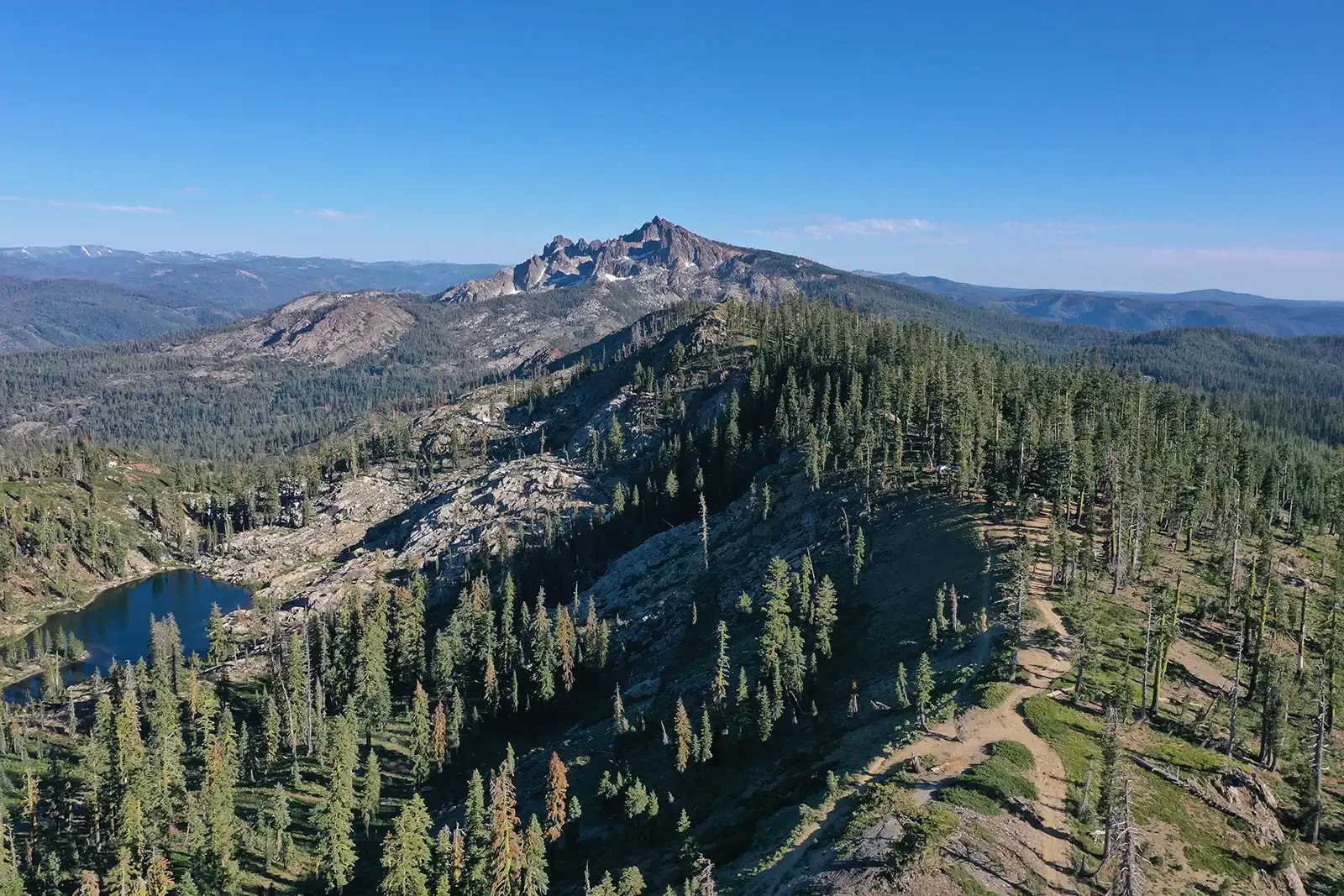
From Truckee, the route dives straight into the backcountry of the Lost Sierra Region, known for its rugged landscape and gold rush history. Linking Tahoe, Sierra, and Plumas National Forests, the diversity of this route is deep in history, and beauty and filled with surprises and challenges. The route travels to the northernmost edge of Sierra Nevada and back to the famous town of Truckee, just north of Lake Tahoe. It is rugged, remote, challenging, and awe-inspiring but very doable logistically with plenty of camping, resupplies, and water along the route.
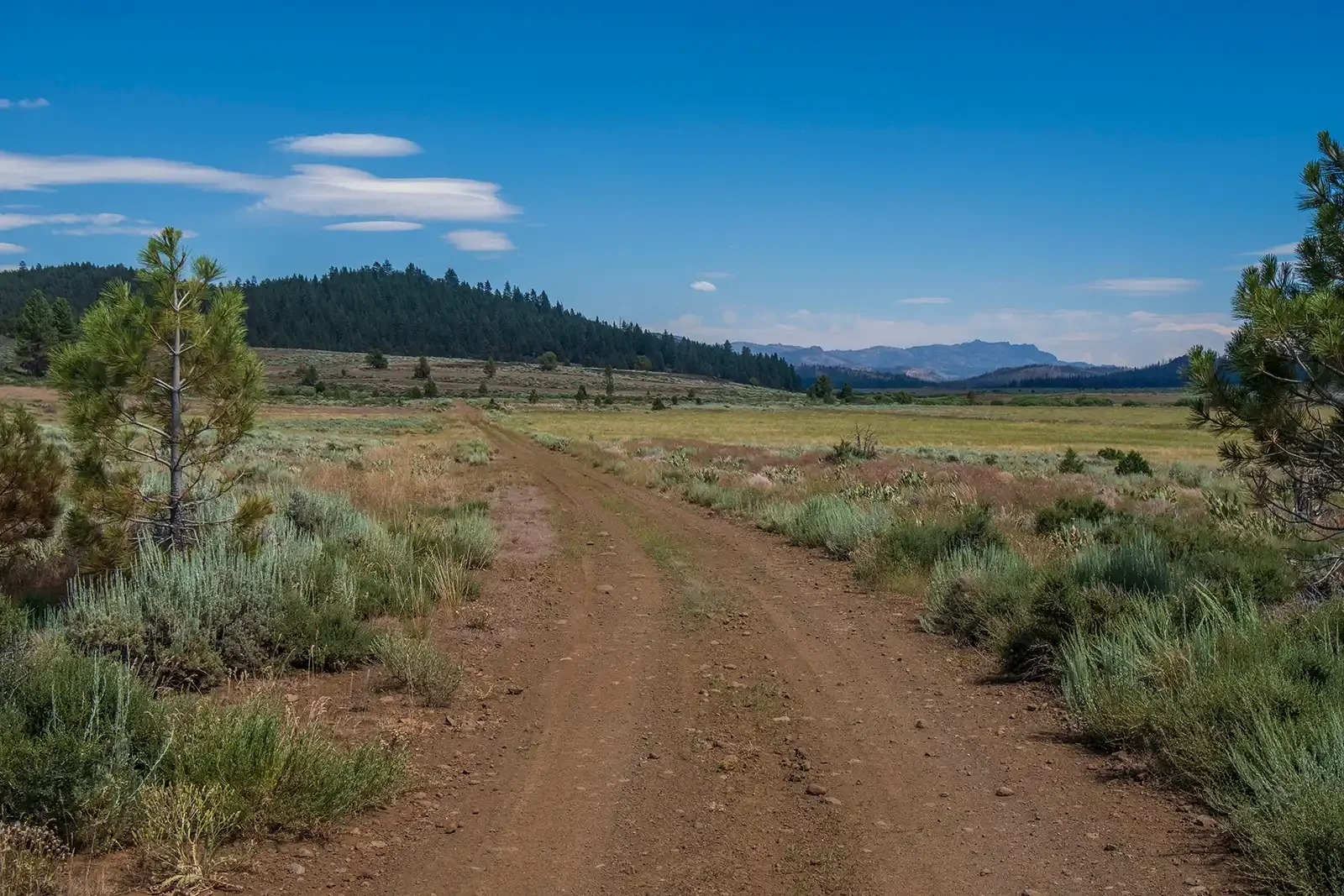
From 7,500-foot mountain passes to low-lying river canyons, high plains valleys, and historic gold rush-era towns for resupplies, this route has an endless array of twists and turns to keep you visually in awe and inspired to pedal on.
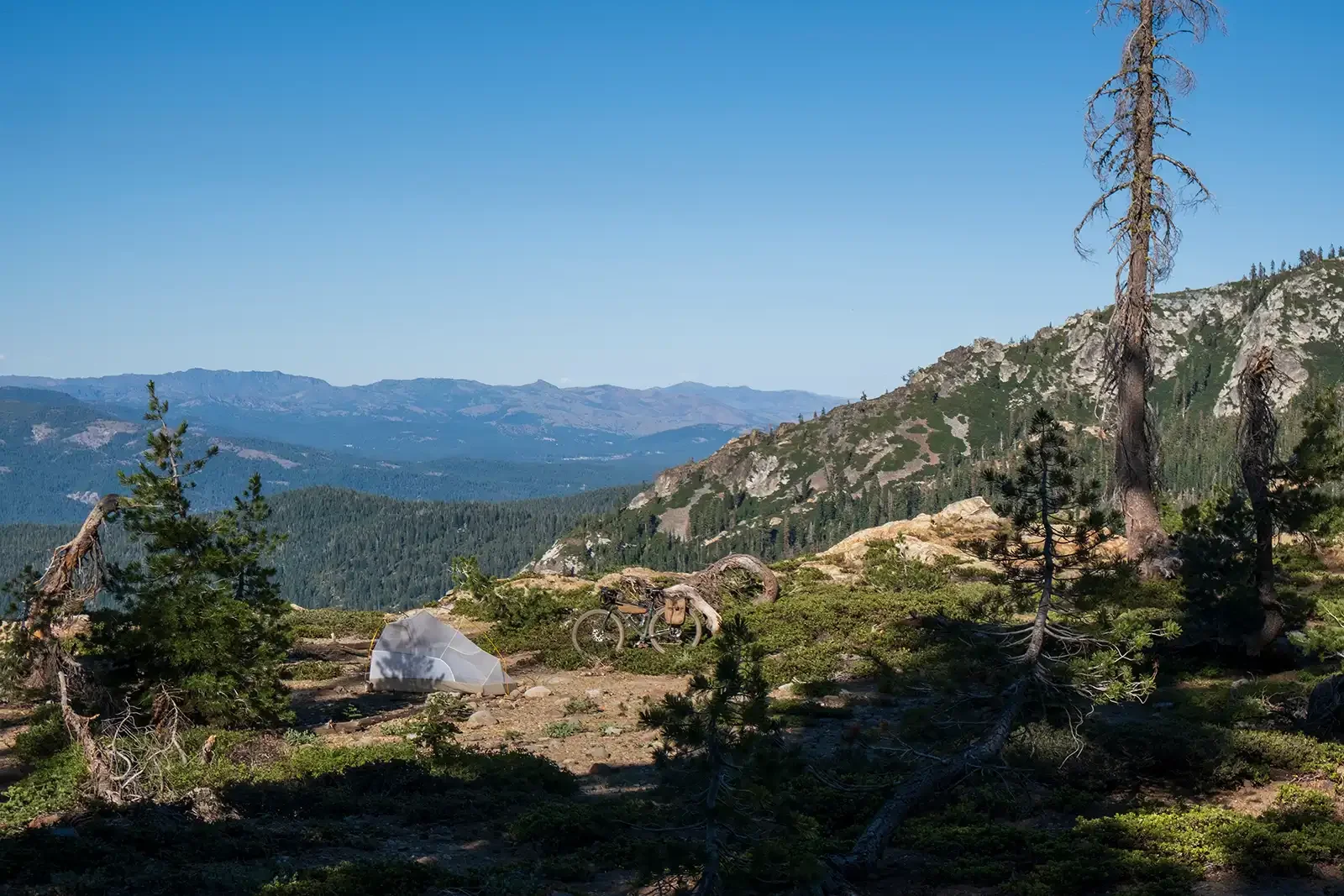
The route is best broken up into five days, with about 60 miles and 6,000 feet of vertical gain per day. There is unlimited dispersed camping in the National Forests, plenty of developed campgrounds, a few hotels and ample resupply locations as you wind your way in and out of the backcountry, dipping into small long-forgotten towns. Find the full route on Ride With GPS.
The Route Features:
High-elevation mountain passes and peaks
Abundant camping and water sources via rivers, streams, creeks and lakes
Historic Gold Rush towns provide ample resupplies
High Sierra plains with free-roaming mountain cattle and livestock
Glacier-carved alpine lakes
Amazing scenery and natural beauty
Solitude!!
Recommended Bike Setup, Surfaces & Timing
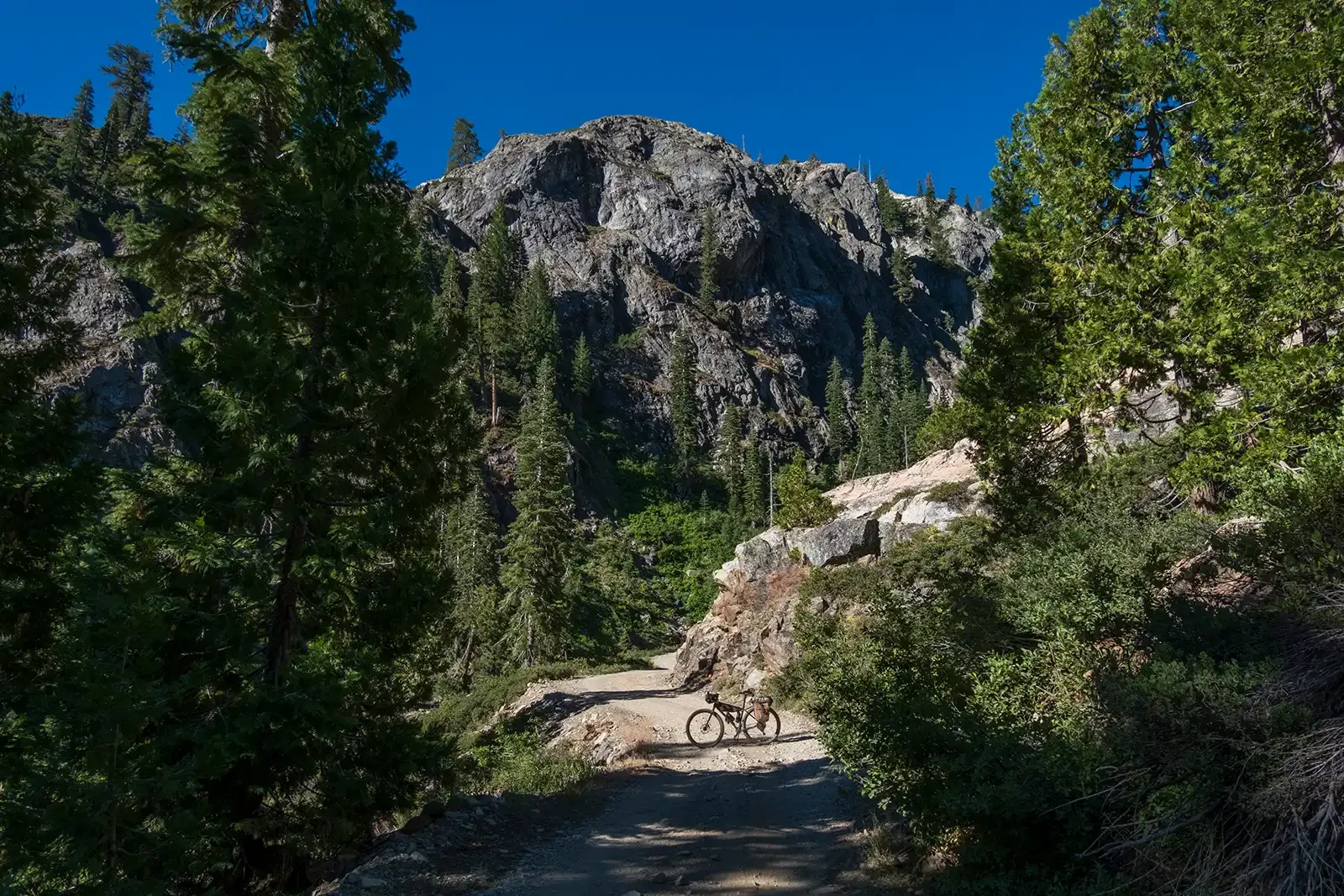
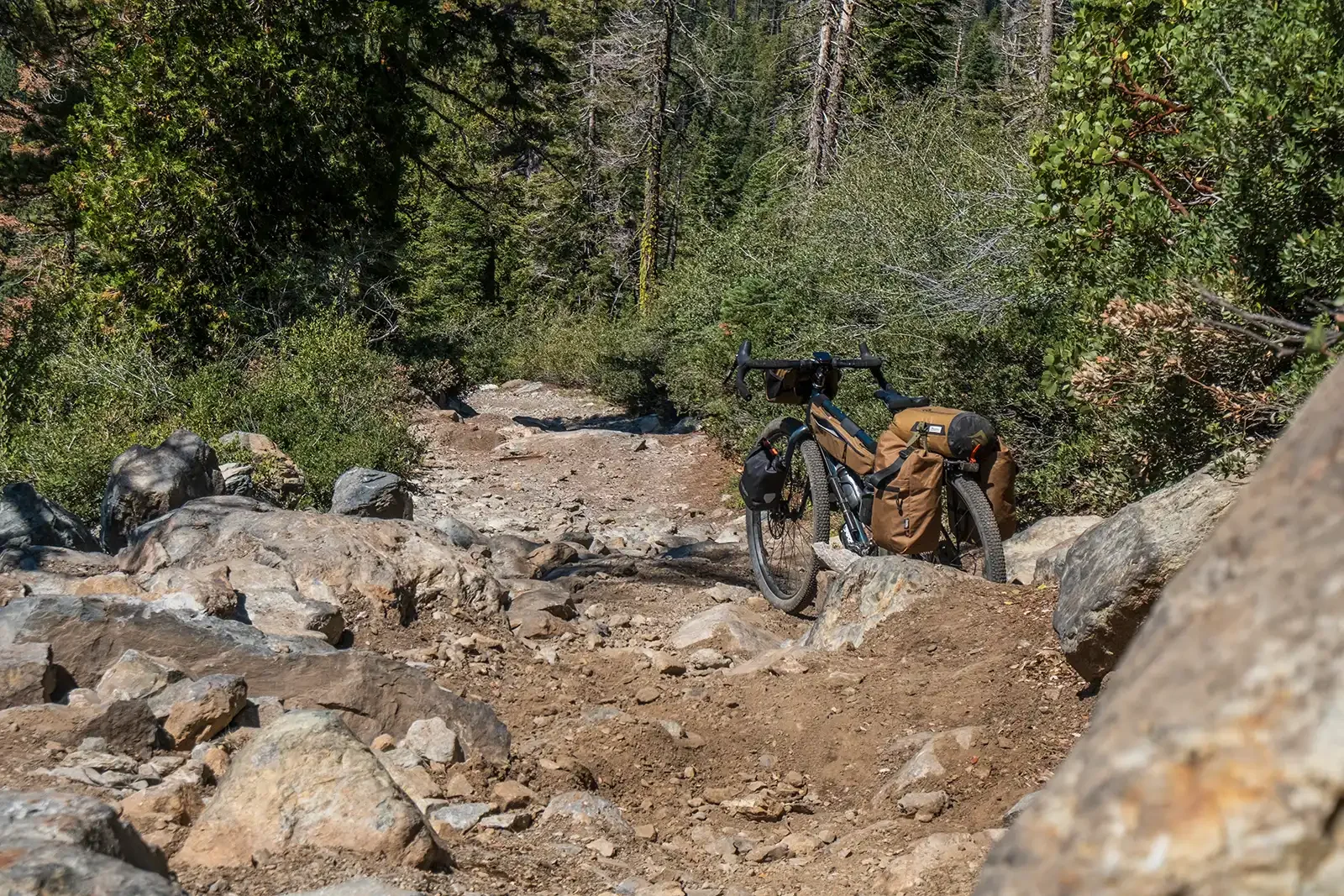
A drop bar gravel bike with 35mm or wider tires or a hardtail mountain bike is ideal. I rode the route on my Kona Sutra LTD and for the most part, it was the right bike for me. By the books, the route has 100 miles of paved roads, but this is misleading as the majority of the paved roads are remote and feel like forest service roads once you get a few miles from town. The surfaces vary and can feel much more like gravel roads than smooth tarmac. The other 150 miles are Forest Service double-track roads and these range from smooth to rocky, but are not technical. The rockiest sections are up near and past the Sierra Buttes. There are a few hike-a-bike sections there, but nothing too crazy. The best time of year to do this route is mid-summer to late fall, due to the snowpack at higher-elevation points. Check the weather window, it gets hot in places and can be freezing at night.
The Ride
The beauty of the route is its flexibility: You can start and end in any of the towns along the way, or shorten the distance to your liking.
I decided to start and end in Truckee since it’s the easiest town to get to for people traveling to the area and it made sense for the resupply layout. The first day travels quickly out of Truckee, diving off the beaten path into Jackson Meadows and along the Historic Henness Pass Road before dropping into Downieville for a resupply and camping spot on the North Yuba River.
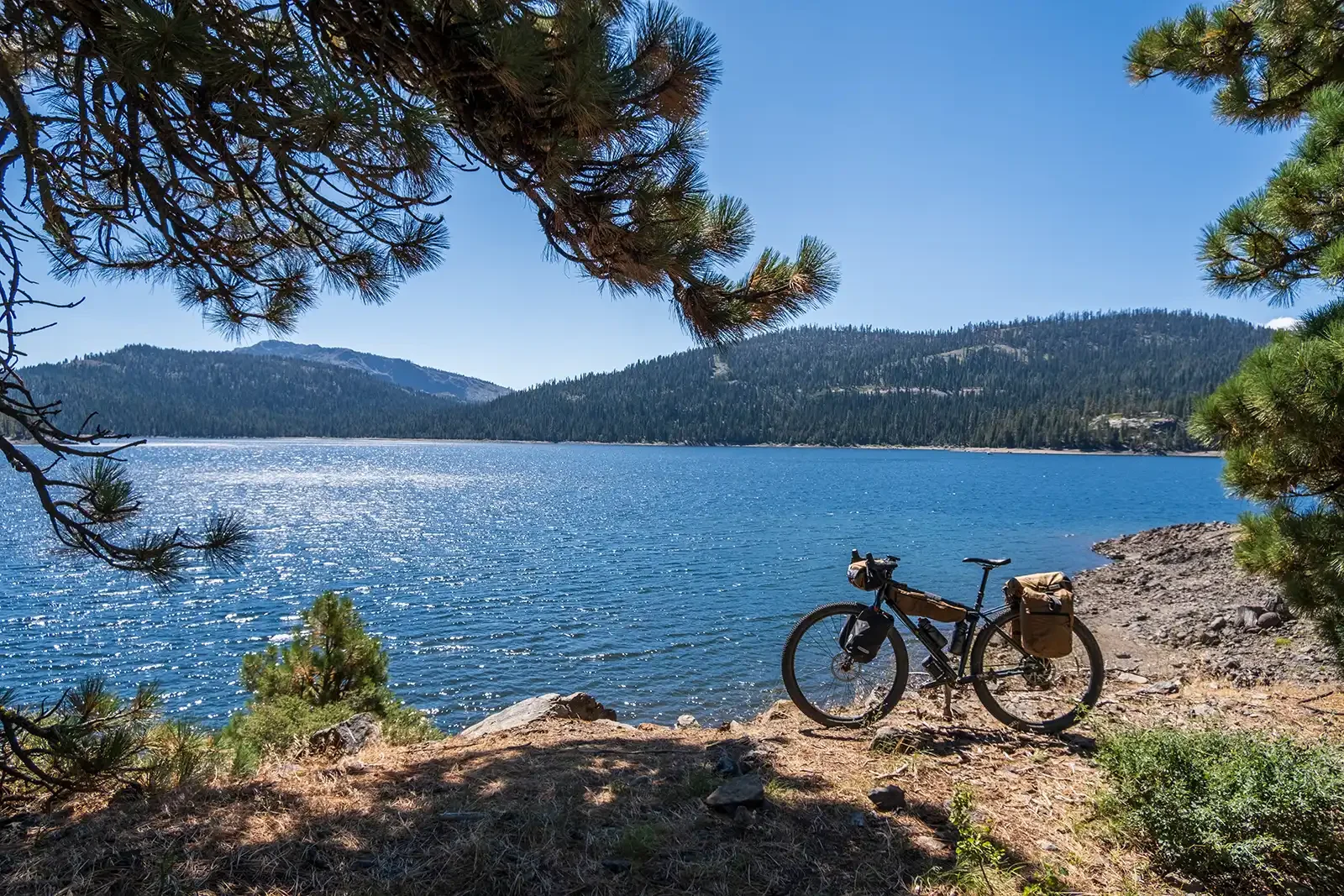
Downieville is a great town in general and an even better place to resupply on any backcountry trip. It has a few restaurants, inns, a general store, a bike shop, a hardware store, and two snow-melt rivers merging into town. From Downieville, the route swiftly climbs 3,000 feet from the river’s edge to the top of the Sierra Crest at nearly 7,500 feet. A bit of this section follows the world-famous Downieville Classic Mountain Bike Race course, dropping down “Baby Heads” before heading up Pauley Creek rather than descending back into Downieville. Bikepacking down the aptly named “Baby Heads” on a touring bike was a slow, laughing and crying experience, and the definition of Type 2+ fun.
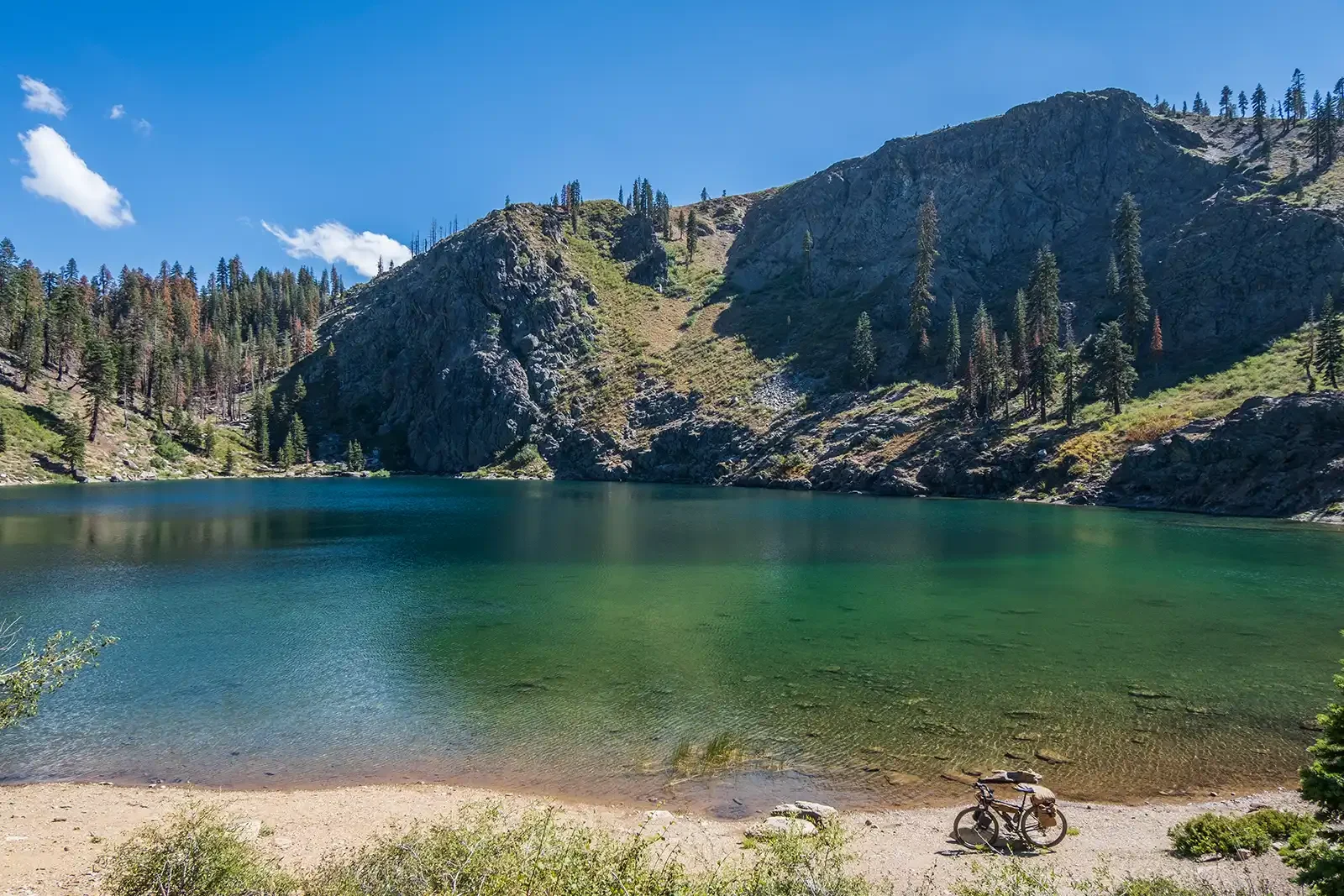
Each day the route changes pretty drastically, which keeps things exciting. The crux of day three is the climb up Mount Hough at the end of the day before descending into Taylorsville, another great town for some modern amenities. There’s an awesome restaurant, The Grizzly Cafe, an amazing general store, and a campground with hot showers right on the river. From Taylorsville, the route hits the northernmost portion of the Sierra Nevada and the terrain is high and dry. This leg features Antelope Lake and Lake Davis with lots of interesting terrain in between.
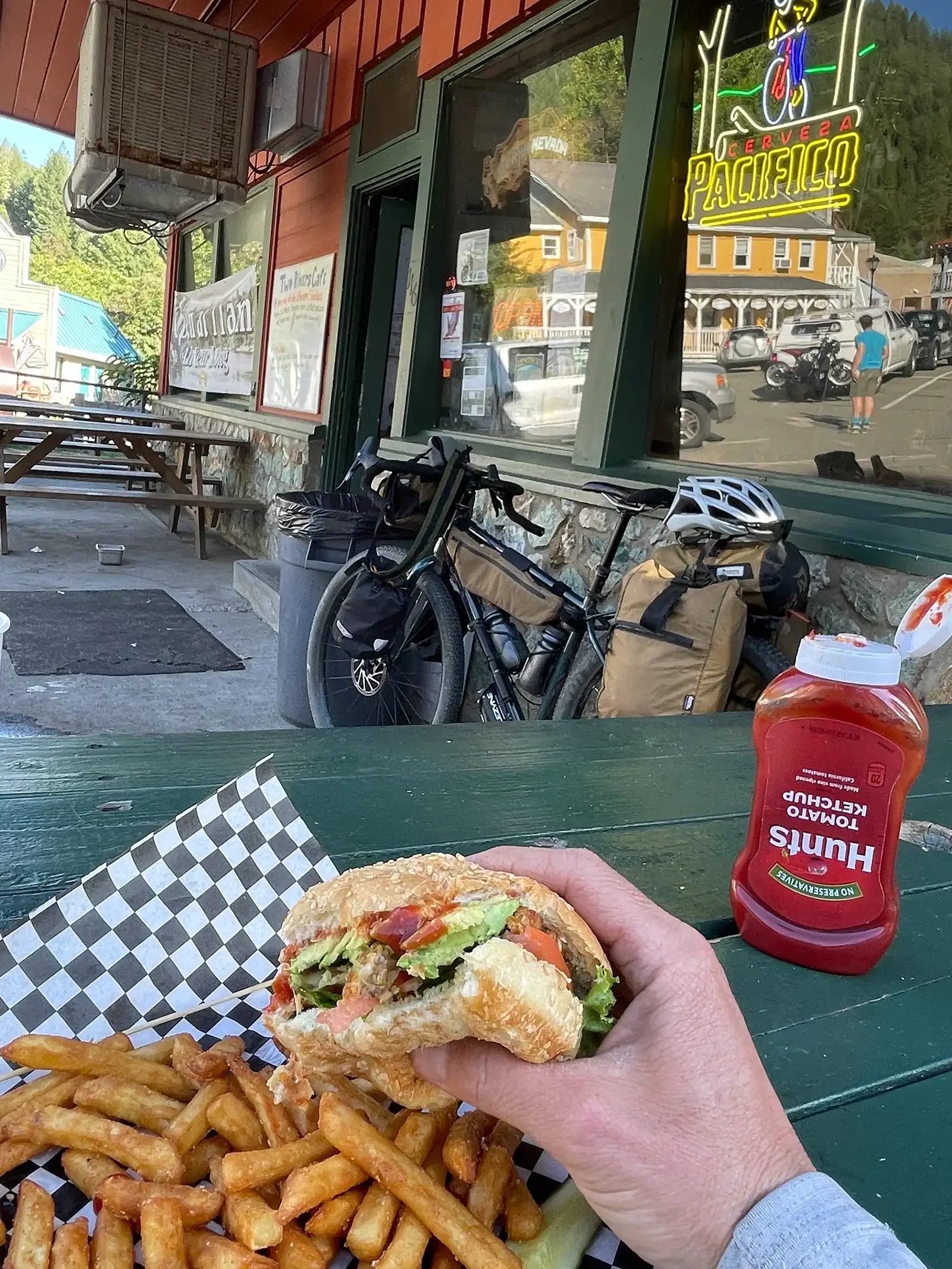
The stretch from Lake Davis to Loyalton has about 15 miles of pavement, which was nice at this point in the ride. Once back on the dirt, “Smith Neck” Road travels back to Truckee via Stampede Reservoir with some fairly smooth gravel road surfaces.
The Lost Siera Bikepacking Route was inspired by SBTS’ Connected Communities project, whose master plan includes the creation of a 550-mile multi-use singletrack trail to connect 15 small mountain towns in the Lost Sierra Region, several of which are included in this route, with the overarching goal of economic stimulation. and this is a self-supported bikepacking route that follows the same model, but can be done now on existing forest service roads. It was an amazing journey!
Several pieces of the Connected Communities proposed route are currently in the environmental review and construction phases, but completing the project will require significant volunteer hours and additional funding. Learn more about the project here: https://sierratrails.org/connected-communities/ and how to support the effort here: sierratrails.org/donate.
Ride Statistics
250 Miles
5 Days
25,000 Elevation Gain
40% paved* 60% unpaved (see description above on paved roads)
Singletrack is optional, the route follows a few very popular trails
96% Rideable
Physical difficulty: 6
Technical difficulty: 4
Timing: June – Sept
Packer Saddle is the highest point at 7,469 feet, with an option to ride up to the lookout at 8,200 feet.
Author Bio
Matt McCourtney (Johnsville CA), Wilderness First Responder, Commercial Photographer and Backcountry Fly Fishing Guide, Sierra Buttes Trail Stewardship board member.
Matt is a backcountry enthusiast. He loves exploring, challenging himself, and discovering intellectual beauty in rugged places. Matt is a Commercial Photographer and Backcountry Fly Fishing Guide by profession and is passionate about developing and sharing outdoor adventures with others. Matt loves digging into Maps and routing his next adventure and exploring new places. Rafting, Mountain Biking, Bikepacking, Moto, Hiking Backcountry Skiing, he is usually out there.
Get Lost Sierra information by signing up for our newsletter.
We promise not to spam you, we just want to pass on the building trails stoke and enjoying the Lost Sierra.